Your membership helps us to continue our mission to promote outdoor water conservation through the use of Xeriscape.
Completed membership applications with check payment must be received at our P.O. box by July 15, 2023 in order to be processed before plant sale day. You may also pick up an application and turn in completed applications along with exact payment when the garden is open to the public. Please contact us with any questions.
Current members please e-mail us any updated contact information at plantsale@hbws.org: Membership cards will be mailed out to current members by June 30, 2023. Any new or renewing membership applications with check payment must be received at our P.O. box by July 15, 2023 in order to be processed in time for plant sale.
Happy New Year 2023
Reminder General Membership Meeting &
February Garden Opening
Happy New Year 2023
FRIENDS OF HALAWA XERISCAPE GARDEN
Aloha FOHXG Members,
Halawa Xeriscape Garden is pleased to announce we will be open to the public on Wednesdays and Saturdays from 9am-3pm beginning Wednesday, February 1, 2023.
As we reopen Halawa Xeriscape Garden, our focus will be on improving the garden after a long period of being closed to the public. Please contact us if you are interested in volunteering in our garden and/or nursery.
Reminder: Please RSVP by January 25, 2023 to let us know you will be attending our (in person) Annual General Membership Meeting on Saturday, January 28, 2023 at 10am. Click on the link below to view our invitation. The mini plant sale is only for attendees of the meeting. Note: we will only accept major credit cards.
We apologize for the inconvenience, The Friends of Halawa Xeriscape Garden and The Board of Water Supply will not proceed with plans this year for the Annual August Unthirsty Plant Sale at Halawa Xeriscape Garden. The Halawa Xeriscape Garden remains temporarily closed to the public at this time and we will update you when we plan to reopen. For any questions please email us at plantsale@hbws.org. Please take care and stay safe.
When considering plants for your home garden… go native! Native Hawaiian plants are beautiful, beneficial to our ecosystem, tend to be “unthirsty”, and many are becoming extinct. Where can you get native Hawaiian plants? As many of them are endangered, DO NOT, I repeat, DO NOT collect them in the wild. You can get them from friends, neighbors, private hobbyists, or your local nursery or garden shop. There are two categories of “native” plants: Endemic means that these plants came on their own via the ocean currents or carried by the wind. Then over thousands or millions of years they evolved into a plant that is totally unique to Hawaii. Indigenous means, again that they came on their own, but remained unchanged and can be found in other parts of the world. Plants that are NOT native are those that were brought here by humans. When the early Polynesians came to Hawaii they brought with them plants that they needed to survive. To name a few, “ulu” (breadfruit), “kalo” (taro), and “kukui” (candlenut). Many of these plants have been incorporated into the Hawaii ecosystem. Unfortunately many compete with the native plants and are now considered “invasive”. According to the Hawaii State Alien Species Coordinator (DLNR), the “awapuhi” (white and yellow ginger, commonly used in leis) is on the list of Hawaii’s Most Invasive Horticultural Plants. We at Halawa Xeriscape Garden kindly ask that you do not grow these plants. At Halawa Xeriscape Garden we highly encourage growing native Hawaiian plants as they are well adapted to growing in our climate and tend not to need a lot of watering. Your garden will show your love of Hawaii if it has the “ma’o hau hele”. A beautiful yellow hibiscus which in 1988 was designated as Hawaii’s state flower. If you want something easy to grow try the “pohinahina”. A sprawling ground cover which is drought, wind, salt, and heat tolerant. It has silvery green leaves which has a pleasant sage-like aroma and clusters of lavender flowers. The early Hawaiians ate the leaves of the “pohinahina” to cure stomach ache and insomnia. Also consider growing the “ohi’a lehua”. Although the most abundant native tree, in recent years hundreds of thousands have died due to a fungal disease referred to as Rapid Ohia Death (ROD). Normally growing in Hawaii’s rain forests, the trees are not necessarily “unthirsty”, but they help to maintain a healthy ecosystem, provides a habitat for native Hawaiian birds and effectively replenishes our aquifers. There is an organization called Ohi’a Legacy Initiative which, in their effort to establish ohi’a trees in residential areas, will from time to time giveaway ohi’a plants.
Ma’o hau hele
Pohinahina
Ohi’a lehua
If you need advice on how to grow native Hawaiian plants check out the book, “Growing Native Hawaiian Plants” by Heidi Leianuenue Bornhorst.
Cactus is a succulent belonging to the Cactaceae Plant Family. They come in many different forms but basically consist of a water-storing body and covered with areoles from which sharp spines protrude. These spines or thorns are actually leaves that had evolved to be sharp and pointy. With about 1750 known species, cacti comes in all different shapes and sizes. Some resemble trees (Saguaro), some climb on long branches (Dragon Fruit), some have stems that look like ping-pong paddles (Prickly Pear), and many are shaped like barrels. One of the most beautiful of the barrel cacti are of the genus Echinopsis. Echino meaning hedgehog or sea urchin and opsis meaning appearance. Echinopsis is a large genus of cacti native to South America. They are known for their spectacular flowers borne on long tubes and often bigger than the plants themselves.
Just a quick reminder that the Annual General Membership meeting is this Saturday- January 29 at 10am online.
Registration is required to receive the log in information. Please test your meeting links ahead of time and contact Sheri at (808)748-5315 or smikami@hbws.org if you have any problems.
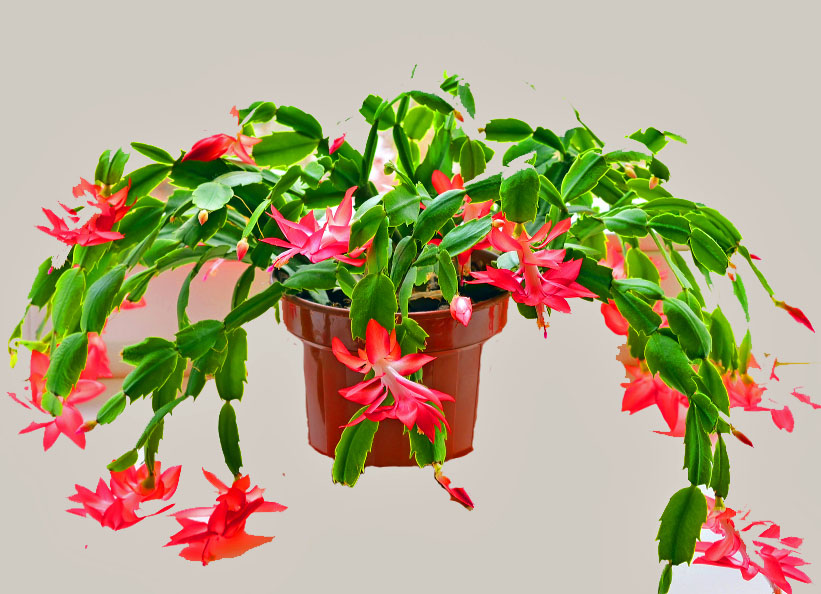
Along with the poinsettia, the Christmas cactus is another plant that flowers for the holidays. Although the Christmas cactus does not look like your typical cactus, it indeed belongs to the Cactus family. It is an epiphyte (like the orchid, bromeliad and tillandsia) and in its natural habitat it typically grows on tree branches and rocks. It is native to the mountain rainforests of Brazil which explains why it needs special care in order for it to thrive. And under the right conditions, your Christmas cactus will live for decades.
Plant your Christmas cactus in soil that provides superior drainage and only water when the surface soil feels dry. The Christmas cactus does not like a drafty location and prefers cool temperatures (ideal temp is 68 degrees F). Being a tropical cacti, it thrives in the shade and high humidity. It works well as a house plant and misting will keep it happy. Flowering is triggered by shorter days and cooler temperatures. To force buds to form, put the plant in complete darkness for 14 hours each night. Once the buds form, move to a brighter location for the flowers to bloom. Be aware that too much light will burn the plant.
Most of the Christmas cactus you see today are cultivars of the genus Schlumberger and the flowers comes in red, pink, orange, purple, white or yellow. According to the College of Tropical Agriculture & Human Resources, UH Manoa, the Christmas cactus does well in Hilo.
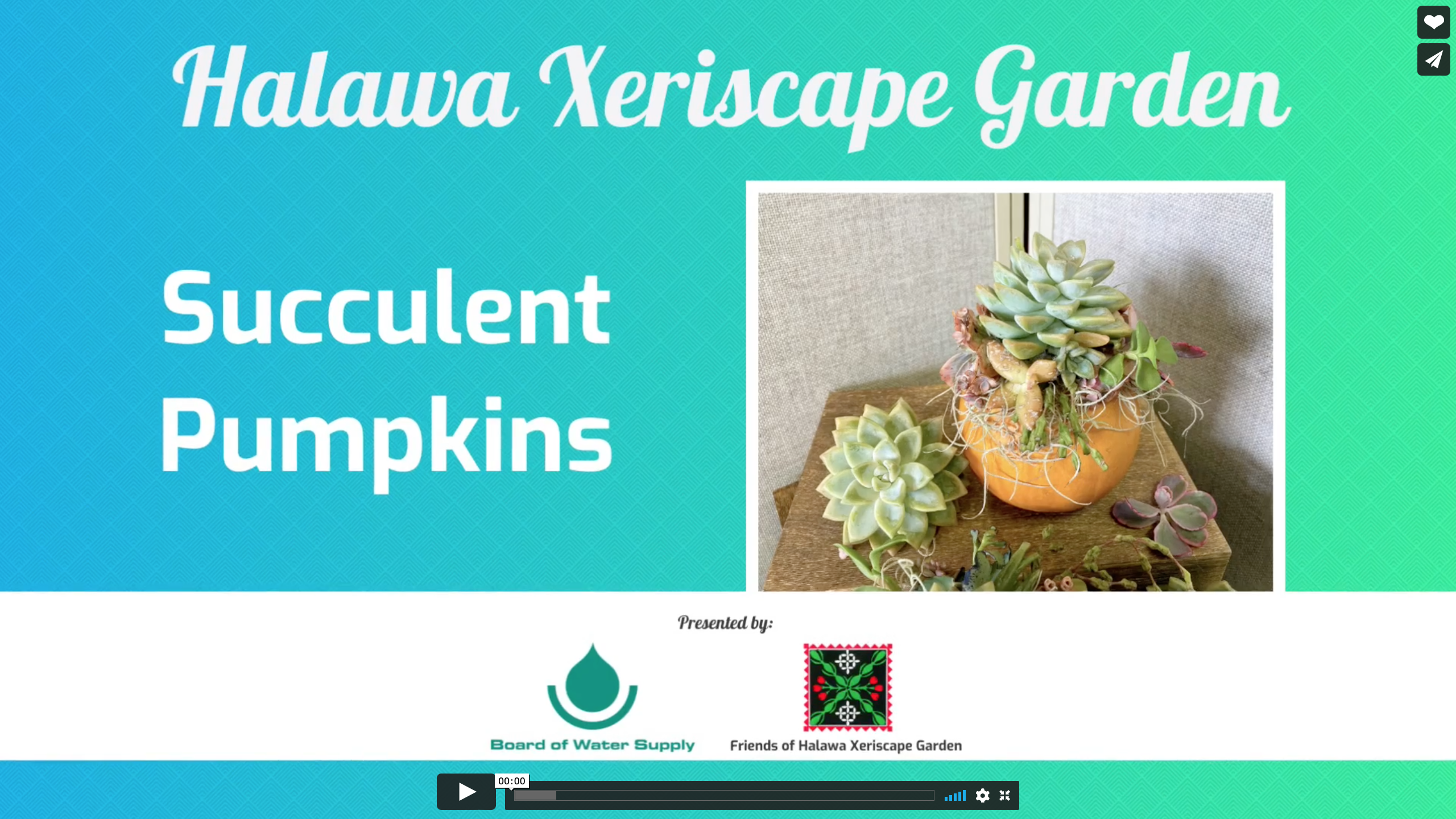
Happy Fall! make your own succulent topped pumpkin or pumpkin planter to display or give away. Low maintenance succulents need little water. When the season is over replant after pumpkins get soft.


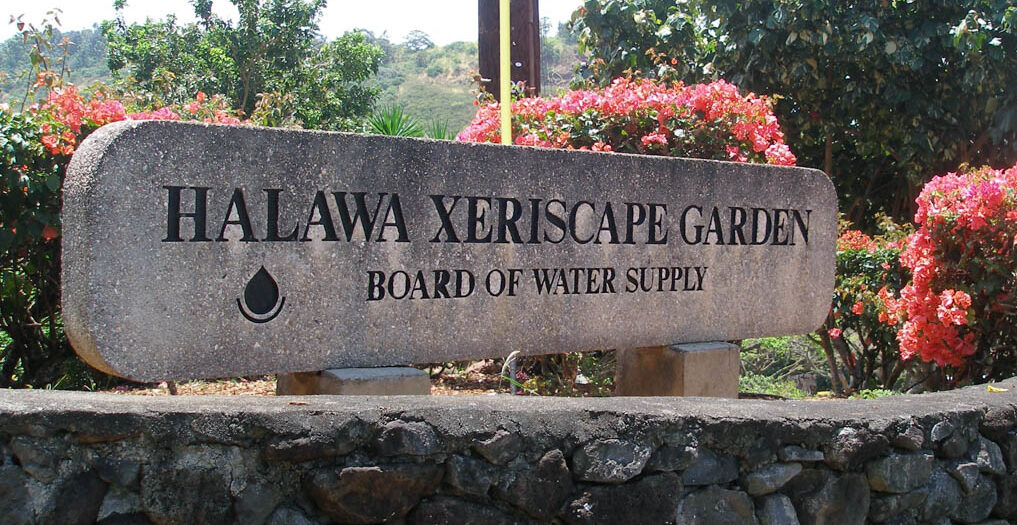
 The Hālawa Xeriscape Garden continues to remain closed to the public due to COVID-19 until further notice.